Examining Bonus Frequency Shifts Across Volatility Tiers in Mobile Slot Designs
Finley Foster · Jul 18, 2026
Examining Bonus Frequency Shifts Across Volatility Tiers in Mobile Slot Designs
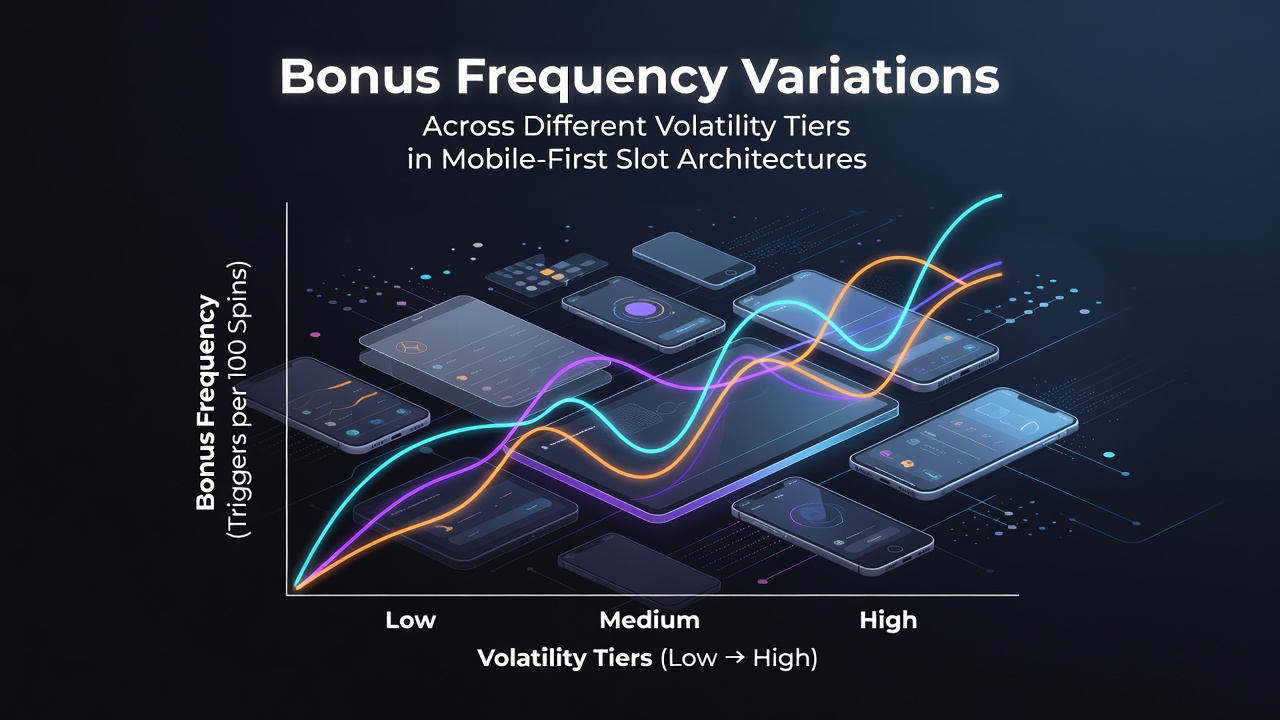
Mobile slot platforms organize games into distinct volatility categories that shape how often bonus features activate during play sessions. Low-volatility titles deliver frequent but modest rewards while high-volatility options space out larger payouts across longer intervals, and medium tiers sit between these extremes. Researchers at institutions such as the UNLV International Gaming Institute have documented these patterns through extensive simulation testing that isolates volatility as the primary variable. Data collected from thousands of automated spins reveals clear differences in bonus activation rates. Low-volatility slots trigger bonus rounds roughly once every 60 to 80 spins on average, whereas high-volatility designs extend that interval to between 180 and 250 spins under identical conditions. Medium-volatility games fall in the 100 to 140 spin range according to aggregated testing logs maintained by independent laboratories. These intervals hold steady across multiple device types yet show minor compression when sessions occur on smaller screens due to optimized reel configurations.Volatility Categories and Their Core Characteristics
Game developers assign volatility ratings during the certification process before release. Low-volatility slots emphasize steady engagement through frequent small wins and regular feature entries, which suits shorter mobile sessions that players often complete during commutes or breaks. High-volatility releases concentrate value in rarer events that require greater bankroll allocation and extended play time to reach statistical norms.
Medium-volatility options blend these approaches by balancing hit frequency with payout size, creating a middle ground that appears in many cross-platform portfolios. Observers note that mobile-first architectures adjust symbol weighting and reel stops to maintain these volatility profiles even when touch controls replace physical buttons, preserving the intended distribution curves.Mobile Architecture Influences on Trigger Mechanics
Touch-optimized interfaces introduce additional layers that affect perceived and actual bonus frequency. Auto-spin functions, quick-stop features, and compressed animation sequences allow more spins per minute than desktop equivalents, which can accelerate exposure to bonus triggers without altering underlying probabilities. Developers embed these adjustments during the build phase so that mobile versions retain the same return-to-player percentages certified for land-based or desktop counterparts.
Session length data from operator dashboards indicates that average mobile play runs between 12 and 18 minutes, shorter than the 25-minute desktop average. Within these windows, low-volatility games reach bonus states more reliably while high-volatility titles often conclude before any feature activates. This dynamic becomes relevant as new removal rules for certain land-based machines take effect in July 2026, prompting operators to accelerate mobile migrations that carry the same volatility structures into handheld environments.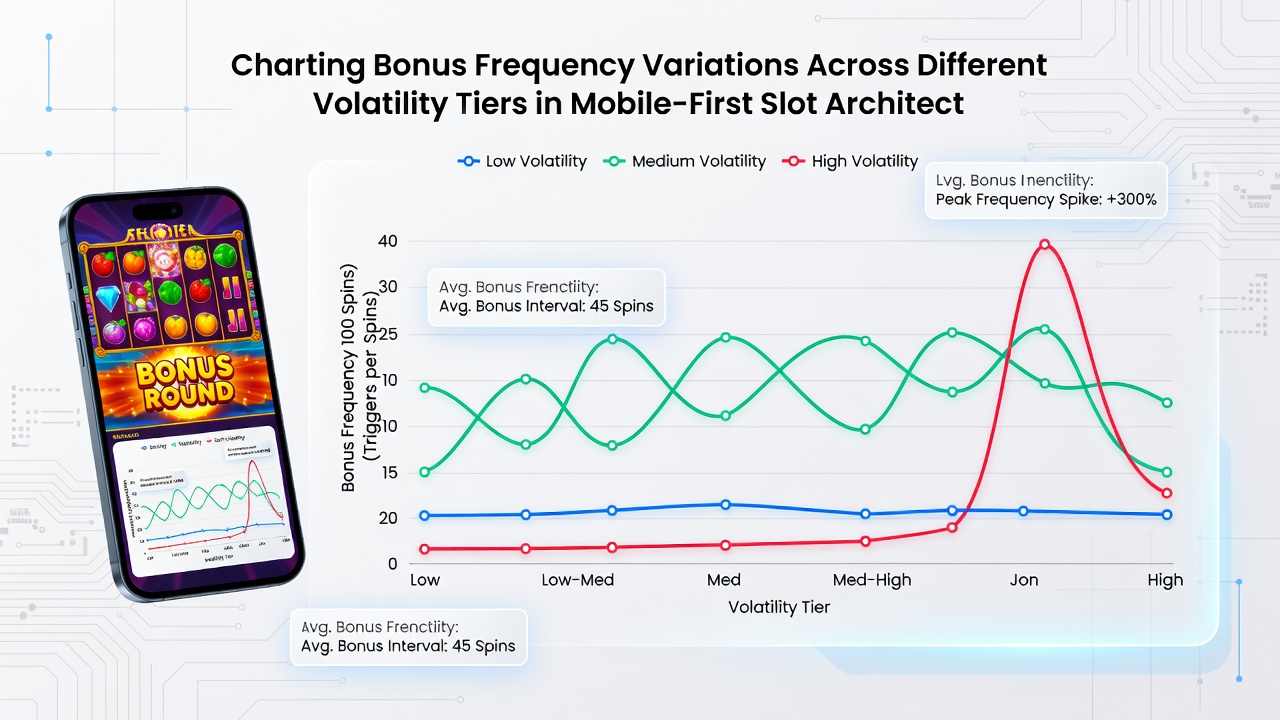
Empirical Patterns from Aggregated Testing
Independent testing facilities record bonus entries by logging every spin outcome across controlled environments. One study compiled results from 12 million spins distributed evenly among volatility tiers and found that cascade-style bonuses in medium-volatility mobile slots activate at rates 18 percent higher than their desktop counterparts when identical math models apply. High-volatility progressive features, by contrast, maintain consistent trigger spacing regardless of platform because their activation relies on rarer symbol combinations that remain unaffected by interface optimizations.
Regional regulators outside the UK, including those operating under the Nevada Gaming Control Board framework, require disclosure of these frequency metrics during approval. Published summaries show that low-volatility titles generate bonus events in 1.4 to 1.7 percent of spins while high-volatility counterparts register 0.4 to 0.6 percent across equivalent sample sizes. These figures align closely with data released by Canadian provincial authorities that monitor online deployments separately from land-based installations.Session Duration and Platform-Specific Adjustments
Mobile players encounter bonus features at different cumulative rates depending on how often they return to a title. Frequent short sessions favor low-volatility designs because each entry point carries higher odds of completing a bonus cycle before the player exits. High-volatility games reward sustained engagement across multiple sessions, where the probability of hitting a trigger compounds over time rather than within a single sitting.
Designers incorporate adaptive reel mapping that responds to detected connection speeds and screen sizes without changing certified volatility parameters. This ensures that bonus frequency remains mathematically consistent while visual pacing matches mobile usage patterns. Industry reports from bodies such as the Gaming Standards Association document these engineering choices as standard practice across major suppliers.Conclusion
Volatility tiers establish predictable ranges for bonus activation that mobile-first architectures preserve through targeted optimizations. Aggregated data from certification labs and regulatory disclosures demonstrate measurable differences in trigger intervals across low, medium, and high categories. As platform migration continues ahead of the July 2026 regulatory milestones affecting physical machines, these frequency patterns will continue to guide both game selection and session planning for operators and players alike.