Reward Layering and Accumulation Mechanics in Handheld Video Slot Games
Bianca Reed · Aug 6, 2026

Reward Layering and Accumulation Mechanics in Handheld Video Slot Games
Data from gaming technology reports shows that portable video slot formats combine layered reward triggers with accumulator systems to create dynamic payout pathways, where multiple trigger conditions activate progressive collection mechanisms on mobile devices. Researchers at institutions studying digital entertainment mechanics have documented how these elements interact through software architectures that track player actions across sessions while maintaining real-time responsiveness on handheld screens.
Core Components of Layered Reward Triggers
Layered reward triggers operate through sequential activation stages in which specific symbol combinations or bet multipliers unlock successive bonus tiers, and observers note that each layer builds upon the previous one by adjusting payout multipliers or feature access. Studies from gaming laboratories indicate that these triggers often rely on random number generators calibrated to deliver outcomes at defined probabilities, allowing developers to design mobile interfaces that display progress visually without interrupting gameplay flow. In practice, a base game spin might fulfill one trigger condition, which then enables a secondary layer that collects additional symbols over subsequent spins, creating chained events that extend play duration on portable formats.
Developers integrate these triggers with touch-screen controls so users can adjust stake levels and observe layer progression through animated meters, and evidence from industry analyses reveals that such designs maintain compatibility across various operating systems while preserving the integrity of the underlying algorithms. Those who've examined code structures in these systems find that conditional checks occur rapidly enough to support seamless transitions between layers, even when network latency affects mobile connections.
Accumulator Systems in Mobile Contexts
Accumulator systems function as persistent counters that gather values from repeated game events, such as coin collections or win multipliers, and these values contribute to larger rewards once thresholds are met. Data indicates that in portable video slots the accumulators update through server-side tracking to prevent loss of progress across device sessions, while client-side displays provide immediate visual feedback on collected amounts. Gaming associations in regions like North America have published findings showing how these systems scale with player activity levels, often incorporating decay timers or reset conditions to balance long-term engagement with mathematical return-to-player rates.
Portable implementations frequently link accumulators to device-specific features including push notifications that alert users when milestones approach, and reports from technical reviews confirm that synchronization protocols ensure consistency whether play occurs on smartphones or tablets. One study revealed that accumulator designs can incorporate multiple parallel counters, each tied to distinct game symbols or bonus types, allowing for varied collection strategies within a single title.
Interactions Between Triggers and Accumulators
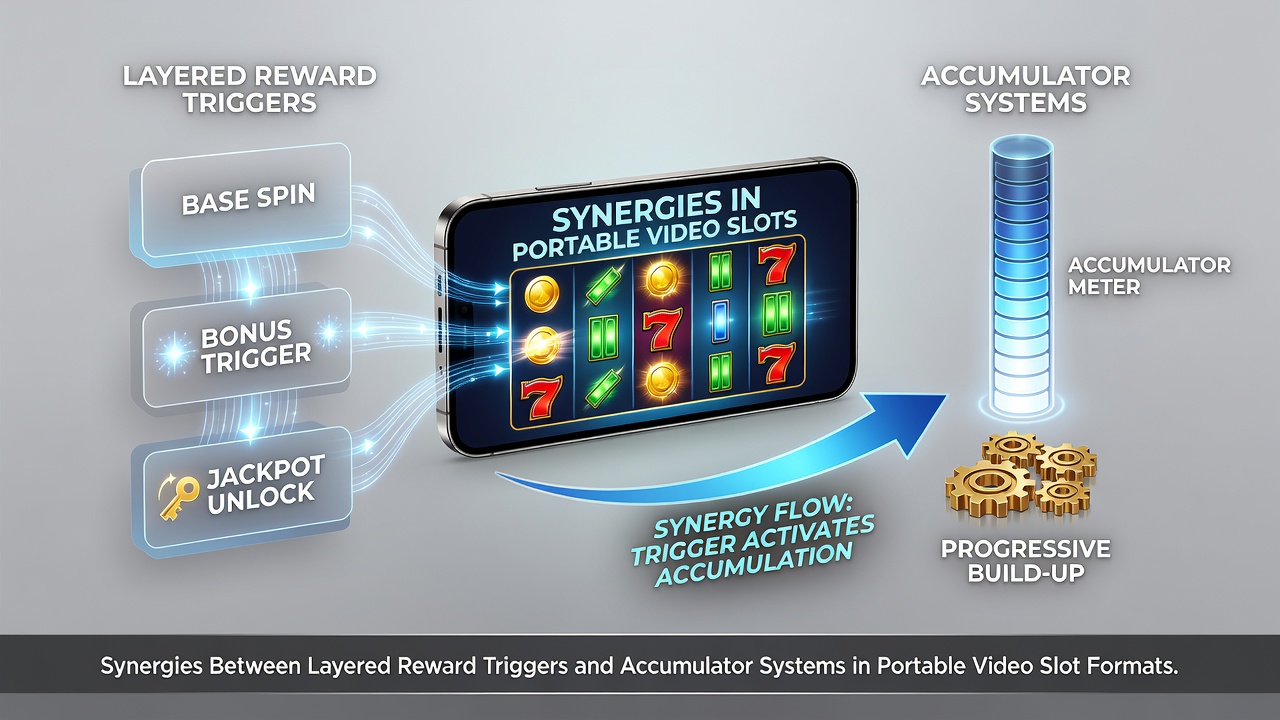
Synergies emerge when layered reward triggers feed directly into accumulator pools, where each completed layer deposits value into the collection system and thereby accelerates progress toward major payouts. Technical documentation from software providers demonstrates that this linkage uses event listeners to detect trigger completions and route associated data to accumulator variables without introducing delays perceptible to users on mobile networks. Observers note that such integration allows for compound effects, in which early layers contribute small increments while later layers multiply the accumulated totals, producing exponential growth patterns in potential rewards.
Portable formats benefit particularly from these synergies because touch interfaces can highlight accumulating values in real time, guiding player decisions on when to increase stakes or pursue specific trigger paths. According to findings shared by Gaming Laboratories International, testing protocols verify that these combined mechanics adhere to regulatory standards across jurisdictions, including those emphasizing fair play and transparent outcome reporting. In August 2026, updates to certification processes in several markets are expected to include expanded checks on mobile accumulator stability during interrupted sessions.
Case examples from deployed titles illustrate how a three-layer trigger sequence might populate an accumulator that unlocks a free-spin mode scaled to the collected amount, and researchers have mapped the probability distributions that govern these interactions to maintain house-edge consistency. What's interesting is that developers often embed diagnostic tools within the code to monitor synergy performance, identifying any drift in trigger-to-accumulator conversion rates across large player datasets.
Technical Implementation on Portable Platforms
Implementation requires careful optimization of memory usage and processing cycles so that layered checks and accumulator updates run efficiently on devices with varying hardware capabilities. Evidence suggests that modular code frameworks separate the trigger logic from accumulator management, enabling independent updates to each system while preserving their interconnections. Industry organizations such as the International Association of Gaming Regulators have outlined best practices for ensuring that these mechanics remain auditable, with logs capturing every trigger activation and accumulator increment for compliance reviews.
Cross-platform testing confirms that synergies function identically whether accessed through native applications or browser-based play, and data from performance benchmarks shows minimal impact on battery consumption even during extended sessions involving frequent layer transitions. Those who've analyzed user metrics report that players engage longer with titles featuring visible accumulator growth tied to layered triggers, though exact retention figures vary by market and title design.
Conclusion
Integrated reward systems that link layered triggers to accumulators continue to shape portable video slot development, with technical standards evolving to support reliable performance across devices and regulatory environments. Figures from certification bodies reveal ongoing refinements in how these mechanics calculate and display outcomes, ensuring alignment with established fairness criteria while accommodating the constraints of mobile hardware and connectivity. As platforms advance, the documented interactions between these components provide a foundation for further refinements in game architecture that maintain both mathematical integrity and operational efficiency.